


Table of Contents
- What You'll Need Before You Start Checking
- Signs of Quality Craftsmanship in Handmade Goods
- How to Verify American Made Quality
- Questions to Ask Handmade Gift Sellers
- Post-Purchase Inspection: What to Check When It Arrives
- Safety Standards and Glaze Safety for Handmade Goods
- How to Verify Handmade Gift Quality: A Quick Checklist
- Frequently Asked Questions
Last Updated: September 20, 2026
What You'll Need Before You Start Checking
You can spot a well-made handmade gift in about five minutes if you know what to look for. The trick is checking the right things in the right order, before you buy and again when the box arrives. This guide from Bareluxes walks through how to verify handmade gift quality step by step, so you never have to guess whether a piece was made with care or pulled from a warehouse shelf.
Handmade gift quality is the sum of four things: how the piece is built, what it is made from, how honest the seller is about their process, and how it holds up over time. Get those four right, and you will rarely be disappointed.
Below, you will find a full checklist, the questions that reveal the most about a seller, and the warning signs that a "handmade" listing is really a mass-produced import.
Signs of Quality Craftsmanship in Handmade Goods
Quality craftsmanship shows up in small details, but the details that matter depend on what the piece is made from. A single generic checklist will miss the specific markers that separate a well-made wooden bowl from a well-made ceramic mug or a hand-woven textile. Use the general signals first, then the material-specific markers below.
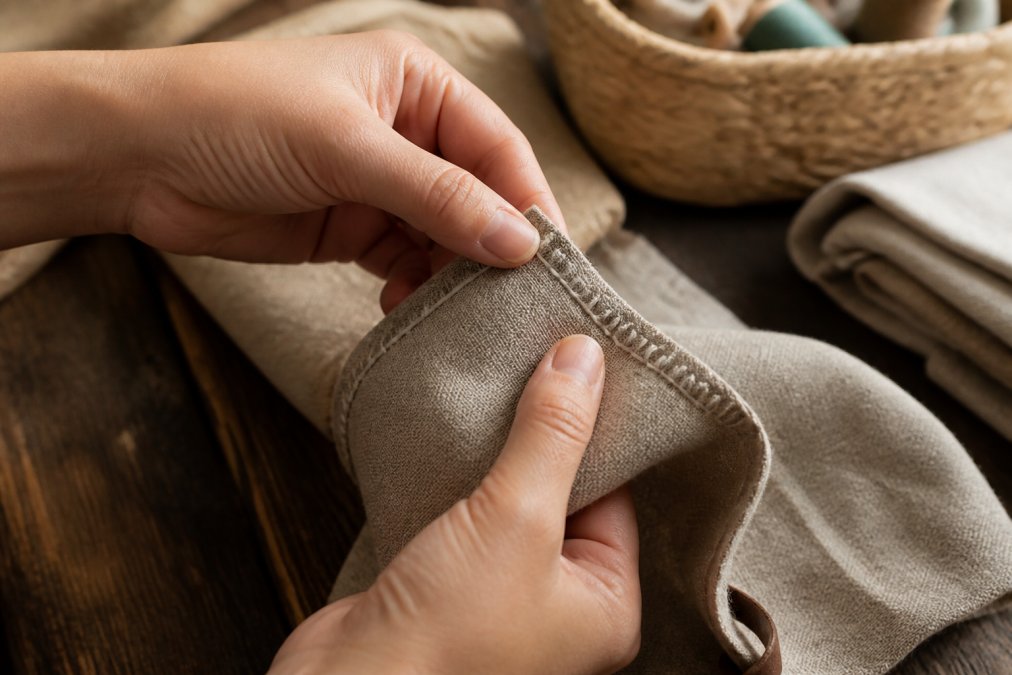
General signals that apply to almost any handmade piece:
- Even, consistent work with no loose threads, drips, or stray marks
- Smooth edges and joins with no rough spots or gaps
- Symmetry and straight lines where the design calls for them
- A finish that is consistent on every side, not just the front
- Weight and balance that feel right for the material and size
Structural Integrity and Finish Quality
Structural integrity means the piece holds its shape and does not wobble, crack, or separate under normal use. Test this by gently flexing the item, checking hinges and clasps, and looking at how parts are joined. Glued joints fail faster than stitched, soldered, or mortise-and-tenon joints. On a piece with moving parts, open and close it several times and listen for grinding or looseness.
Material-Specific Quality Markers
The markers below are the ones most buyers never check, and they are where the real quality differences live.
Wood. Look at the end grain and the joinery. A well-made wooden piece uses joinery that fits tightly without visible gaps, and the grain on adjacent parts is often matched or deliberately contrasted. Check that the finish is even inside and out, including the underside and any interior corners. A food-contact wooden item should be finished with a food-safe oil or wax, not a thick lacquer that can chip. Small cracks at the end grain, called checking, are a sign the wood was dried too quickly and may worsen over time.
Textiles. Hold the fabric up to the light and look for consistent weave density. Hand-woven or hand-knit pieces often have small irregularities, but the tension should be even across the piece.
Material Sourcing and Raw Materials
Ask what the piece is made from and where those materials came from. Makers who source their own raw materials can usually name the supplier, the region, or the species. Vague answers like "premium materials" tell you nothing. On natural materials, small variation in color and grain is normal and often a sign of authenticity; perfectly uniform surfaces on a supposedly natural material are worth questioning.
How to Verify American Made Quality
Verifying American made quality starts with asking the maker directly where the item is designed, assembled, and shipped from. A real maker will answer without hesitation.
Watch for these signals:
- The seller names their workshop or production space
- Product photos show the actual workspace, not stock images
- The listing explains which parts are made in-house
- You can request a photo of the item in progress
Red Flags That Signal Dropshipping or Replicas
Dropshipped items often ship from overseas warehouses and arrive weeks later. Red flags include:
- Stock photos used across many different shops
- The same item listed by dozens of sellers at wildly different prices
- No process photos, only finished product shots
- Vague or copy-pasted descriptions
- Shipping times that stretch past two weeks
Questions to Ask Handmade Gift Sellers
The fastest way to judge a seller is to ask two or three specific questions and read the answers carefully. Good makers enjoy talking about their work, and their replies tend to be specific, unprompted, and full of small details that only someone who actually made the piece would know. The goal is not to interrogate anyone; it is to give a real artisan a chance to demonstrate expertise and to give a reseller a chance to reveal themselves.
- Can you show me a photo of this piece being made? A real maker usually has work-in-progress shots on hand or can take one. A reseller will deflect, offer a stock photo, or say the workshop is closed.
- What materials do you use, and where do they come from? Look for a named supplier, region, or species. "Premium materials" or "high-quality fabric" is a non-answer.
- How long does a custom order take to ship? A maker who controls production can give you a realistic window and explain what drives it. A dropshipper often quotes a vague range or promises speeds that do not match handmade timelines.
- What happens if the item arrives damaged? A confident answer describes a specific process: photos, a replacement, a repair. A vague "we will take care of it" is a yellow flag.
- Can you describe the finish on the back or underside? This is the single most revealing question. Makers who finish all sides of a piece can describe exactly what the back looks like. Resellers who have never held the item often cannot.
- What is the hardest part of making this piece? Real makers have an immediate answer, usually about a specific step, material behavior, or tool. A reseller will give a generic compliment about the craft.
- Can you adjust the dimensions or color, and what would that change about the price or timeline? Customization requires direct control of production. A maker can explain the trade-offs; a reseller usually cannot.
How to Read the Answers
If a seller answers every question with confidence and detail, you have done most of the verification work already. If they dodge, you have saved yourself a return.
Post-Purchase Inspection: What to Check When It Arrives
Inspect the item the day it arrives, while the packaging is still on hand. Check for cracks, loose threads, uneven color, and any sharp edges. Compare the piece to the listing photos. If something looks off, photograph it right away and contact the seller before you use or gift the item.
Safety Standards and Glaze Safety for Handmade Goods
Glaze safety matters most for ceramics, mugs, and anything that touches food. A food-safe glaze will not leach harmful metals into drinks or meals. Ask the maker whether their glaze is food-safe and lead-free. For items meant for children, check that paints and finishes are non-toxic.
How to Verify Handmade Gift Quality: A Quick Checklist
Use this checklist before you buy and again when the item arrives.
| Check | What to Look For | Why It Matters |
|---|---|---|
| Stitching and joins | Even, tight, no loose threads | Shows real handwork |
| Edges and finish | Smooth, consistent on all sides | Signals attention to detail |
| Materials | Named source or region | Confirms real sourcing |
| Process photos | Workspace or in-progress shots | Proves it is handmade |
| Shipping origin | Matches the maker's location | Rules out dropshipping |
| Safety labeling | Food-safe, non-toxic notes | Protects the recipient |
Frequently Asked Questions
What are the key indicators of high-quality craftsmanship in handmade items?
Look for even stitching, smooth finish quality, and consistent aesthetic consistency across the piece. Check structural integrity by gently flexing joints or edges. Ask about material sourcing and construction techniques. A maker who shares process transparency, such as photos or videos of their artistic process, is more likely to deliver handcrafted quality. These signs of quality craftsmanship in handmade goods separate artisan work from mass-produced replicas.
How can I verify American made quality without certifications?
Ask the seller directly about where raw materials are sourced and where the item is assembled. Request photos of the workspace or process. Check whether the seller can explain their construction techniques in detail. A legitimate USA-based business will answer these questions clearly. Look for markers like a maker's mark, a story about the artisan, and transparency about any imported components. If the seller dodges questions, that is a red flag for dropshipping or replica goods.
What questions should I ask a handmade gift seller before buying?
Ask about material sourcing, construction techniques, and expected durability under normal wear and tear. Request details on customization options and turnaround time. Inquire about glaze safety if the item is food-safe or for children. Ask whether the item is handcrafted or mass-produced. A seller who values process transparency will welcome these questions and provide specific answers rather than vague claims about bespoke quality or artisan labor.
Verifying handmade gift quality takes a few extra minutes, but it protects the moment you hand someone a gift you are proud of. Bareluxes makes that step easy with personalized jewelry, custom name necklaces, cozy blankets, and commemorative plaques, all designed and assembled with care and backed by a 100% customer satisfaction guarantee. Get started with Bareluxes and give a gift that feels as meaningful as the occasion.


