


Table of Contents
- The Short Answer: Custom Jewelry Timelines at a Glance
- Custom Jewelry Design Process Steps, From Sketch to Shipment
- Factors Affecting Custom Jewelry Production Time
- Simple Personalized Pieces vs. Full Bespoke Jewelry: Real Timelines
- Tips for Ordering Personalized Gifts on Time
- Rush Orders, Remote vs. In-Person Workflow, and What to Expect
- Frequently Asked Questions
Last Updated: October 1, 2026
The Short Answer: Custom Jewelry Timelines at a Glance
Most custom jewelry takes two to six weeks to make, and the exact timeline depends on design complexity, stone sourcing, and how many revisions you request. This guide breaks down how long does custom jewelry take to make, step by step, so you can order with confidence.
Here is what typically drives the schedule:
- Simple engraved or name pieces: a few days to two weeks
- Full bespoke designs with sourced stones: four to eight weeks
- Rush orders: possible, but limited by workshop capacity
The biggest surprise for most buyers? The bench work is fast. It is the approval loop that eats the calendar.
Custom Jewelry Design Process Steps, From Sketch to Shipment
Every custom piece moves through three main phases: consultation, design approval, and fabrication. Understanding each stage helps you plan around the real bottlenecks instead of guessing.
Step 1: Design Consultation and Concept
The design consultation is where your idea becomes a plan. You share the occasion, the name or symbol, and any style references. A good jeweler asks about metal choice, chain length, and how the piece will be worn.
This stage usually takes one to three days. Remote clients handle it over email or video, while in-person clients often finish in a single visit. A common mistake is skipping details here. Vague notes lead to extra revisions later, which adds days.
Step 2: 3D Rendering, CAD Model, and Design Approval
A CAD model is a digital blueprint of your piece, rendered in 3D so you can see it before anything is cut or cast. You review the rendering, request changes, and approve the final version.
This is the stage that stretches timelines. Each round of design revisions adds a day or more. Two or three rounds are normal.
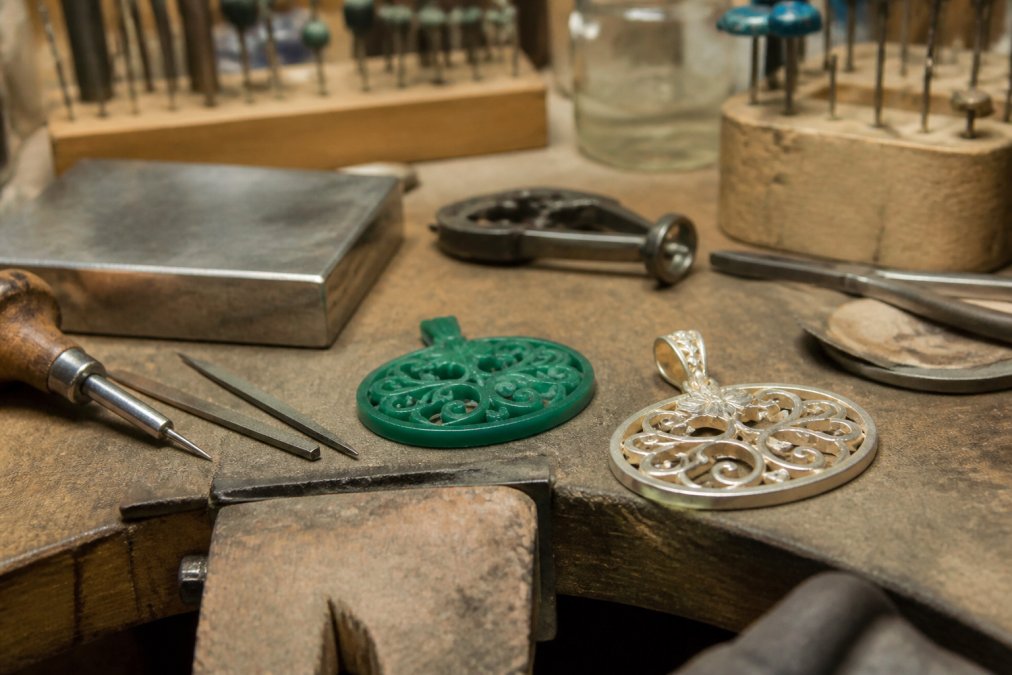
Step 3: Casting, Metalwork, Setting, and Polishing
Metalwork and polishing are hands-on stages. A jeweler cleans and shapes the piece, and the surface gets polished to a shine.
Factors Affecting Custom Jewelry Production Time
Several variables decide whether your order ships in ten days or six weeks. Knowing them upfront lets you set realistic expectations and avoid disappointment. The four that move the calendar most are revision rounds, stone sourcing, seasonal demand, and the delivery chain.
Design Complexity and the Revision Loop
The revision loop is the single biggest wildcard in any custom process. Every change you request restarts part of the design phase. A simple name piece moves fast. An intricate design with layered symbols and fine detail does not.
| Change Type | Typical Added Time | Why |
|---|---|---|
| Font or text swap | A few hours to 1 day | CAD file edit, no re-render of structure |
| Symbol or motif adjustment | 1-2 days | New geometry, fresh render for approval |
| Size or proportion change | 2-3 days | Structural rebuild, sometimes a new wax print |
| Stone repositioning or swap | 2-5 days | New setting geometry plus sourcing check |
| Full concept restart | 1-2 weeks | Back to consultation and a new CAD model |
Stone Sourcing and Seasonal Demand
Seasonal demand matters more than most buyers expect, and it is the factor competitors gloss over. Workshop capacity is finite, and orders cluster around predictable dates:
- Late November through mid-December: the heaviest window of the year. Lead times can stretch by one to two weeks as benches fill.
- Late January through mid-February: a second spike ahead of Valentine's Day, though usually shorter than the December rush.
- May through June: engagement and wedding season pulls capacity toward bridal work.
- Late summer and early fall: generally the quietest stretch, which is when custom work moves fastest.
Shipping and the Last Mile
The delivery chain is the part of the timeline most guides ignore, and it is where surprises hide. A finished piece is not a delivered piece.
After quality control, a custom order typically moves through:
Classic Heart Style Name Necklace →
- Final inspection and cleaning, same day to 1 day.
- Packaging and insurance setup, same day. High-value pieces usually ship signature-required and insured, which adds handling steps.
- Carrier transit, 1-5 business days domestically, longer for remote areas or around peak shipping holidays.
- Delivery attempt and signature, if no one is home, the package goes back to the carrier and a reattempt adds a day or more.
Simple Personalized Pieces vs. Full Bespoke Jewelry: Real Timelines
Not every custom order is a full bespoke project. Simple personalized pieces and full bespoke jewelry follow very different schedules, and knowing which one you need saves time.
| Order Type | Typical Timeline | Main Time Driver | Best For |
|---|---|---|---|
| Personalized name necklace | 3-10 days | Engraving and finishing | Birthdays, quick gifts |
Tips for Ordering Personalized Gifts on Time
A little planning removes almost all the stress from ordering personalized gifts on time. These tips come from watching thousands of orders move through production.

- Order three weeks before your milestone date, not three days
- Confirm spelling and character limits before you approve the design
- Batch all your revision notes into one message
- Choose in-stock styles over fully custom designs when time is tight
- Ask about rush options before you place the order, not after
Rush Orders, Remote vs. In-Person Workflow, and What to Expect
Rush orders can compress a timeline, but only within limits. A workshop can prioritize your piece, yet production still takes real time. Expect rush service to shave days, not weeks, and expect it to cost more, because a rushed order often means overtime bench hours and expedited shipping.
What rush actually changes:
- Queue position: your order jumps ahead of standard work. This is the biggest lever.
- Bench hours: a jeweler may work evenings or weekends on your piece.
- Shipping: overnight or two-day transit replaces standard ground.
What rush cannot change:
- Casting and cooling time: metal has to set, and molds have to cure.
- Stone sourcing: if a stone is not in stock, no amount of rush money makes it appear faster.
- Revision rounds: each round still takes the time it takes. Rush plus five revisions is slower than standard plus one.
Remote vs. In-Person: How the Workflow Changes the Clock
This is the comparison most guides skip, and it matters because the two workflows fail in different ways.
In-person workflow:
- Consultation, metal selection, and stone viewing happen in one visit.
- You see samples and finishes in hand, which reduces ambiguity.
- Approvals tend to happen faster because you are looking at the same object the jeweler is.
- The trade-off is scheduling: you have to get to the shop, and appointment availability can add days.
Remote workflow:
- Consultation happens over email, phone, or video.
- You rely on photos, 3D renderings, and written descriptions.
- Approvals can be faster in raw hours because you respond on your own schedule, but they can also stretch if a rendering is unclear and you ask for clarification.
- The trade-off is ambiguity: color, scale, and finish are harder to judge on a screen, which is exactly what drives extra revision rounds.
Frequently Asked Questions
What factors influence the production time of custom jewelry?
The biggest factors are design complexity, how many design revisions you request, and the materials needed. A piece with intricate engraving can add days or weeks. Seasonal demand also matters: orders placed in November and December take longer because jewelry workshops are busiest. Shipping logistics add another few days, especially for remote orders that require multiple approval rounds before production begins.
How far in advance should I order custom jewelry for a special occasion?
For simple personalized pieces like a custom name necklace, two to three weeks gives you a comfortable buffer. Add one extra week if your order falls between October and December. Ordering early also gives you room to request design revisions without missing your delivery date.
Can custom jewelry be rushed for a deadline?
Many jewelers offer rush orders, but the amount of time saved depends on where your piece sits in the process. If your design is already approved, a workshop can often compress production into a few days. If you are still in the design consultation stage, rushing is harder because approval rounds cannot be skipped. Ask about rush options before you place the order, and confirm the delivery date in writing.
Is it cheaper to have jewelry custom made?
Custom jewelry usually costs more than mass-produced pieces because you are paying for design time, a CAD model, and hand-crafted finishing. A simple custom name necklace from Bareluxes starts at $19.99, which is competitive with off-the-shelf options. Full bespoke work with gemstone selection and intricate settings runs higher. The trade-off is that you get a piece made to your specifications, not a generic design that thousands of other people own.
Custom jewelry timelines feel unpredictable until you know where the delays actually come from. Most of the wait is design approval and stone sourcing, not the craft itself. Bareluxes designs, assembles, and ships most orders from our USA facility, with a 100% customer satisfaction guarantee and a range of personalized pieces for every occasion. Get started with Bareluxes and give a gift that arrives on time and means something.


