


Table of Contents
- Custom Jewelry vs Mass Produced: A Side-by-Side Comparison
- Manufacturing Methods: Casting, Forging, and Hollow vs. Solid Metal
- Handmade Jewelry Quality vs Machine Made: Durability and Longevity
- The Benefits of Personalized Jewelry Beyond Aesthetics
- Cost, Resale Value, and Jewelry Appraisal Differences
- Maintenance, Repairability, and Long-Term Care
- Why Buy from Small Jewelry Businesses for Custom Pieces
- Which Custom Jewelry Option Is Right for You?
Last Updated: August 17, 2026
Custom Jewelry vs Mass Produced: A Side-by-Side Comparison
The difference between custom jewelry and mass-produced jewelry runs through every stage of production, durability, and meaning to the wearer. Custom jewelry is designed and produced for a specific individual, often incorporating personal details like a name or date. Mass-produced jewelry is manufactured at scale using automated processes, with identical pieces sold to thousands of buyers.
The table below captures the core differences at a glance.
| Factor | Custom / Handcrafted | Mass-Produced |
|---|---|---|
| Manufacturing method | Hand-assembled or custom-cast | Machine-stamped or die-cast |
| Metal construction | Solid or custom-forged | Often hollow or thin-walled |
| Personalization | Full design freedom | Limited or none |
| Quality control | Piece-by-piece inspection | Batch sampling |
| Durability | Higher, with proper care | Variable, often lower |
| Repairability | Easier for skilled jewelers | Difficult; parts not standardized |
| Resale / appraisal value | Higher for precious metals | Minimal |
| Lead time | Days to weeks | Immediate (in stock) |
| Price point | Moderate to high | Low to moderate |
Manufacturing Methods: Casting, Forging, and Hollow vs. Solid Metal
The manufacturing method is the single biggest predictor of durability and structural integrity.
How Mass-Market Pieces Are Made
Mass-production relies on machine-stamped blanks and die-casting. In die-casting, molten metal is forced into a mold under high pressure, producing identical pieces at high volume. However, die-cast pieces are often hollowed out to reduce material costs. A hollowed-out pendant looks identical to a solid one but weighs less and is far more vulnerable to denting, cracking, and warping under everyday wear. Machine-made gemstone settings are cut to standard dimensions, meaning stones are held by tension rather than precisely fitted prongs, increasing the risk of loss.
Quality control typically means batch sampling: one piece from every hundred is inspected, leaving imperfections in individual pieces undetected.
How Custom and Handcrafted Pieces Are Made
Custom and handcrafted jewelry is fabricated individually by a skilled jeweler or small team. Lost-wax casting is common in bespoke jewelry, but the process is slower and paired with hand-finishing at every stage. Custom-forged metal, where material is worked under pressure rather than poured into a mold, produces a denser grain structure and greater structural integrity than casting alone.
Gemstone settings in handcrafted pieces are fitted to the specific stone rather than a standard dimension, so prongs and bezels hold more securely. Each piece receives individual attention before shipping.
According to the Gemological Institute of America's jewelry education resources, the method of metal fabrication directly affects a piece's long-term durability and suitability for daily wear.
Handmade Jewelry Quality vs Machine Made: Durability and Longevity
Handcrafted pieces made from solid precious metals, sterling silver, solid gold, or gold-filled stock, maintain their structure under daily wear because the metal has consistent density throughout. When surface scratches appear, a jeweler can polish them out without compromising the piece's form.
Mass-produced pieces made from hollowed-out or plated base metals face a different trajectory. Plating wears through at contact points, exposing the base metal beneath. Once the plating is gone, re-plating often costs more than the piece's original price, making repair economically impractical.
For pieces intended as lasting gifts, an anniversary necklace, a birthday keepsake, a mother's day present, solid construction is the baseline requirement for the piece to still look meaningful five years from now.
The Benefits of Personalized Jewelry Beyond Aesthetics
The benefits of personalized jewelry extend well past the visual. A piece engraved with a name, date, or symbol specific to the recipient carries emotional weight that no ready-made piece can replicate. Personalization creates irreplaceability: a generic pendant can be replaced; a necklace bearing someone's child's name cannot.
Custom jewelry also gives design freedom that mass-market catalogs cannot match: choice of font, metal finish, chain length, and symbol. The American Gem Society's consumer education resources note that buyers increasingly seek jewelry reflecting personal narrative rather than generic style trends, a shift mass-production cannot accommodate at scale.
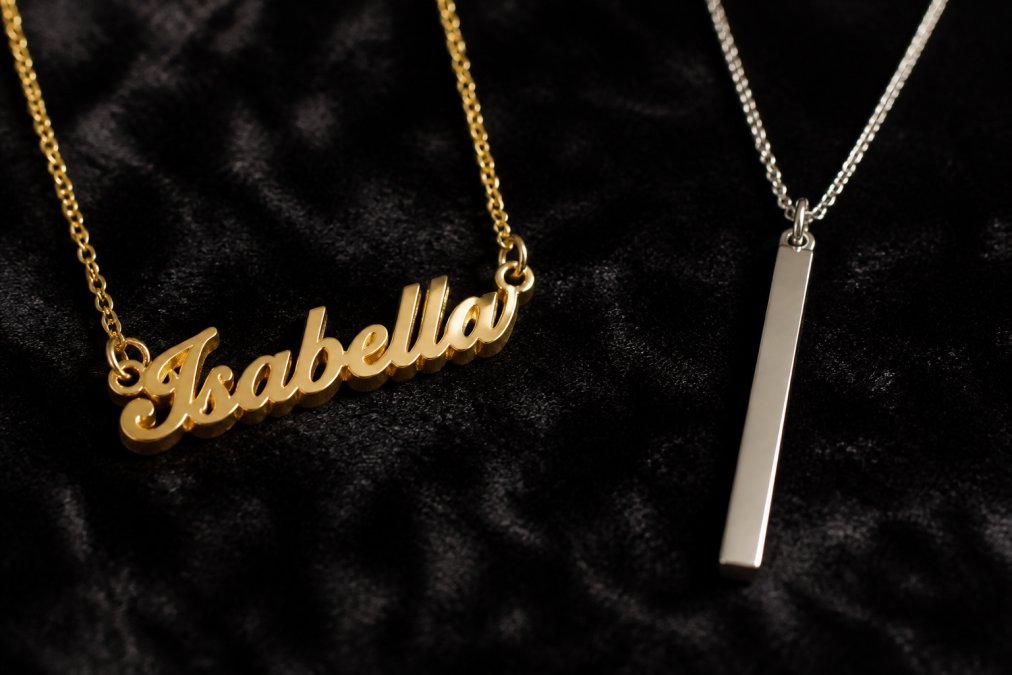
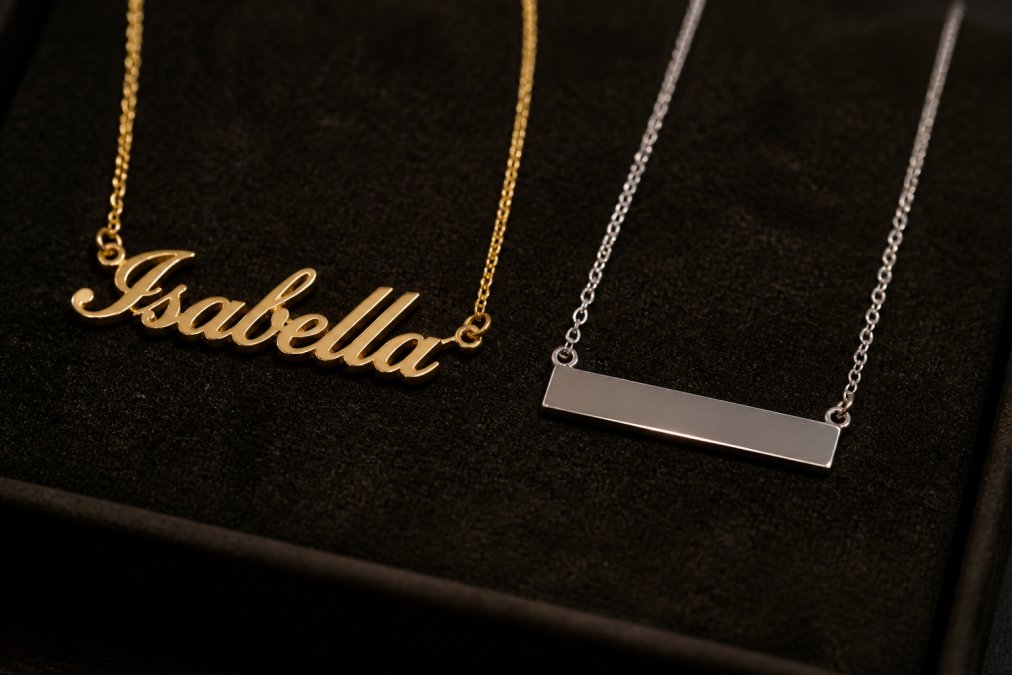
The Bareluxes collection of personalized name necklaces, including the Classic Heart Style Name Necklace at $39.95 and the Classic Vertical Name Necklace at $54.95, reflects this directly. Each piece is custom-made to order with up to 10 characters, available in polished stainless steel or 18K yellow gold finish, and assembled in the USA.

Cost, Resale Value, and Jewelry Appraisal Differences
Custom pieces do cost more upfront than mass-produced equivalents because individual production requires more human labor, solid precious metals cost more than plated base metals, and quality control at the piece level is more resource-intensive.
What the upfront price comparison misses is the total cost of ownership. A mass-produced plated piece needing replacement every two to three years costs more over a decade than a solid custom piece bought once.
Mass-produced jewelry in base metals or thin gold plate carries essentially no resale value. Custom pieces made from solid sterling silver or solid gold retain material value. For a jewelry appraisal, a handcrafted piece in solid precious metal receives a documented valuation based on material weight and craftsmanship. A mass-market piece in plated metal typically receives no formal appraisal.
| Price Factor | Custom / Handcrafted | Mass-Produced |
|---|---|---|
| Upfront cost | Higher | Lower |
| Replacement frequency | Low (years to decades) | Higher (2-4 years for plated) |
| Repair cost | Moderate, often worthwhile | Often exceeds piece value |
| Resale / appraisal value | Present for solid metals | Minimal to none |
| Long-term cost | Often lower | Often higher |
Maintenance, Repairability, and Long-Term Care
Custom and handcrafted pieces are generally repairable by any skilled jeweler. Because they are made from standard precious metal stock with conventional construction techniques, a local jeweler can resize a ring, replace a clasp, re-tip a prong, or re-polish a surface without needing proprietary parts.
Mass-produced pieces present different challenges. Hollow construction makes soldering a crack or reshaping a deformed section technically difficult. Non-standard clasp mechanisms may require proprietary replacement parts no longer available once a product line is discontinued. Plated pieces cannot be polished without removing the remaining plating.
Maintenance for both types follows similar principles: store pieces separately, clean with a soft cloth and mild soap, and avoid chlorine and harsh chemicals. A well-maintained custom piece in solid metal lasts indefinitely, while a mass-produced plated piece degrades regardless of care.
As documented in the Jewelers of America care and maintenance guidelines, solid precious metal jewelry cleaned and stored properly can maintain its finish and structural integrity for generations.
Why Buy from Small Jewelry Businesses for Custom Pieces
Small businesses that produce custom jewelry operate on a fundamentally different quality model than large-scale manufacturers. Because each piece is made to order rather than warehoused in bulk, there is no incentive to cut corners on materials or construction. A returned piece represents a proportionally larger impact on a small operation, so quality control is personal.
There is also accountability. When you buy custom jewelry from a small business, you are buying from a team that can answer specific questions about materials, production methods, and timelines. Mass-market retailers often cannot tell you where a piece was made or what metal alloy was used.
Bareluxes designs, assembles, and ships its personalized jewelry from a USA-based facility, backing every order with a 100% customer satisfaction guarantee. The Signature Style Name Necklace and Classic Style Name Necklace, both at $39.95, are made to order in polished stainless steel or 18K yellow gold finish, with each piece packaged in a complimentary gift box. That process requires the kind of attention to detail that small businesses are structured to provide.


Supporting a small jewelry business also means supporting domestic manufacturing, ethical sourcing practices, and a production model where workers are skilled assemblers with a stake in quality.
Which Custom Jewelry Option Is Right for You?
The right choice depends on what you are buying and how long you expect it to last.
Choose custom jewelry if:
- The piece is a meaningful gift for a milestone occasion
- You want the recipient's name, a date, or a personal symbol incorporated
- You expect the piece to be worn regularly for years
- You value repairability and long-term durability
- You want a unique design that cannot be found on a shelf
Choose mass-produced jewelry if:
- You need a piece immediately with no lead time
- The occasion is casual and the piece is decorative
- Budget is the primary constraint
For most gift-giving scenarios, anniversaries, birthdays, Mother's Day, custom jewelry is the stronger choice. The personalization makes the gift specific to one person, solid construction makes it last, and sentimental value compounds over time.
The Classic Paw Print Name Necklace at $39.95, for example, is the kind of piece a pet lover will keep for years precisely because it cannot be replicated from a mass-market catalog.
| Buyer Profile | Best Option | Why |
|---|---|---|
| Gift-giver for milestone occasion | Custom / handcrafted | Personalization, durability, sentimental value |
| Buyer needing immediate gift | Mass-produced | In stock, no lead time |
| Long-term jewelry investment | Custom / handcrafted | Solid metal, appraisal value, repairability |
| Fashion / trend-driven buyer | Mass-produced | Lower cost for short-term wear |
| Recipient with specific name/date | Custom / handcrafted | Only option for true personalization |
Custom jewelry costs more today and lasts longer. Mass-produced jewelry costs less today and requires replacement sooner. For a gift meant to be kept, the math and sentiment point in the same direction.
Choosing the right piece of jewelry for someone you care about is harder than it looks. Bareluxes offers personalized name necklaces designed, assembled, and shipped from a USA-based facility, backed by a 100% customer satisfaction guarantee. Every piece is made to order in your choice of polished stainless steel or 18K yellow gold finish, packaged for gifting, and built to be worn for years. Shop Bareluxes and give a gift that carries the person's name and the care you put into choosing it.
Frequently Asked Questions
Is custom-made jewelry worth the higher price point?
For most buyers, yes. Custom jewelry is made to your specifications using solid precious metals and precise gemstone settings, which means it lasts longer and holds up better to daily wear than hollow or thinly cast mass-produced alternatives. You also get a unique design that carries personal meaning. When you factor in durability, repairability, and sentimental value, the cost difference over the life of the piece is often smaller than it appears upfront.
What are the primary quality differences between handmade and mass-produced jewelry?
Handmade and custom-forged pieces typically use heavier metal weight, solid construction, and hand-finished gemstone settings, which reduces the risk of stones loosening over time. Mass-market jewelry relies on high-volume casting or stamping, which can leave micro-imperfections inside the metal and result in thinner, hollowed-out sections to cut material costs. The craftsmanship and attention to detail in handcrafted pieces generally translates directly to better structural integrity and longevity.
Does custom jewelry hold its value better than mass-produced items?
Custom and bespoke jewelry generally performs better at resale and jewelry appraisal than mass-produced pieces. Because custom work uses documented metal weight, quality precious metals, and individual craftsmanship, appraisers can assign a more accurate replacement value. Mass-market pieces often appraise below retail because their materials and construction are standardized and widely available. Custom pieces with unique designs or ethical sourcing documentation tend to retain value more reliably over time.
What are the benefits of choosing a small business for personalized jewelry?
Small jewelry businesses offer direct accountability that large production operations cannot match. You communicate with the people who actually assemble your piece, which makes customization requests more precise and quality control more consistent. Small businesses also tend to use ethical sourcing practices for their precious metals and materials, and they stand behind their work personally. For personalized gifts, that direct relationship means fewer errors, faster corrections, and a finished piece that genuinely reflects what you asked for.
How does the durability of custom jewelry compare to factory-made pieces?
Custom jewelry built from solid metal with proper forging or hand-finishing outlasts most factory-made alternatives. Mass-production processes often create hollowed-out sections or thin casting walls that weaken over time, especially at stress points like clasps and prong settings. A well-made custom piece can be resized, re-tipped, or re-polished by a jeweler decades later. Many mass-produced items, especially those with plated finishes, cannot be repaired cost-effectively once the surface wears through.
This article was written using GrandRanker


