


Table of Contents
- Start With the Care Label and Yarn Fiber
- How to Wash a Knitted Cotton Blanket by Hand
- Machine Washing: Delicate Cycle Rules That Protect Stitches
- How to Wash Bernat Blanket Yarn Projects
- How to Dry a Knit Blanket Without Stretching
- How to Wash a Wool Blanket Without Shrinking It
- Spot Cleaning, Stains, and Colorfastness Testing
- Washing Frequency, Storage, and Long-Term Care
- Frequently Asked Questions
Last Updated: October 14, 2026
Start With the Care Label and Yarn Fiber
Learning how to wash custom knit blankets safely starts with two things: the care label and the yarn. Skip them and you risk shrinking a keepsake you cannot replace.

A 100% cotton yarn blanket behaves differently from wool or acrylic: the fiber decides the water temperature, soap, and drying method.
Reading a Care Label on a Handmade Blanket
A care label is the maker's instruction sheet, listing fiber content and the safe cleaning method.
Check these four things before you touch water:
- Fiber content (cotton, wool, acrylic, or a blend)
- Washing method (hand wash or machine wash)
- Water temperature (cold or lukewarm)
If the label is missing, ask the maker about yarn type and construction.
Why Yarn Fiber Decides Everything
Fiber determines how a blanket reacts to water, heat, and friction. Wool fibers have scales that lock together in heat, causing shrinkage. Cotton absorbs water and gets heavy, so it stretches when wet.
Match your approach to the fiber, and your blanket keeps its softness and shape for years.
How to Wash a Knitted Cotton Blanket by Hand
Hand washing is the safest method for a knitted cotton blanket, giving you full control over water temperature and agitation to protect stitches and color:
- Fill a clean basin or bathtub with cool water
- Add a small amount of mild detergent and swirl it in
- Submerge the blanket and let it soak for 15 to 30 minutes
- Press the water gently through the fibers with your hands
- Drain the soapy water and refill with clean cool water
- Rinse until no suds remain
Never scrub, twist, or rub the fabric. Friction causes pilling and pulls stitches out of shape.
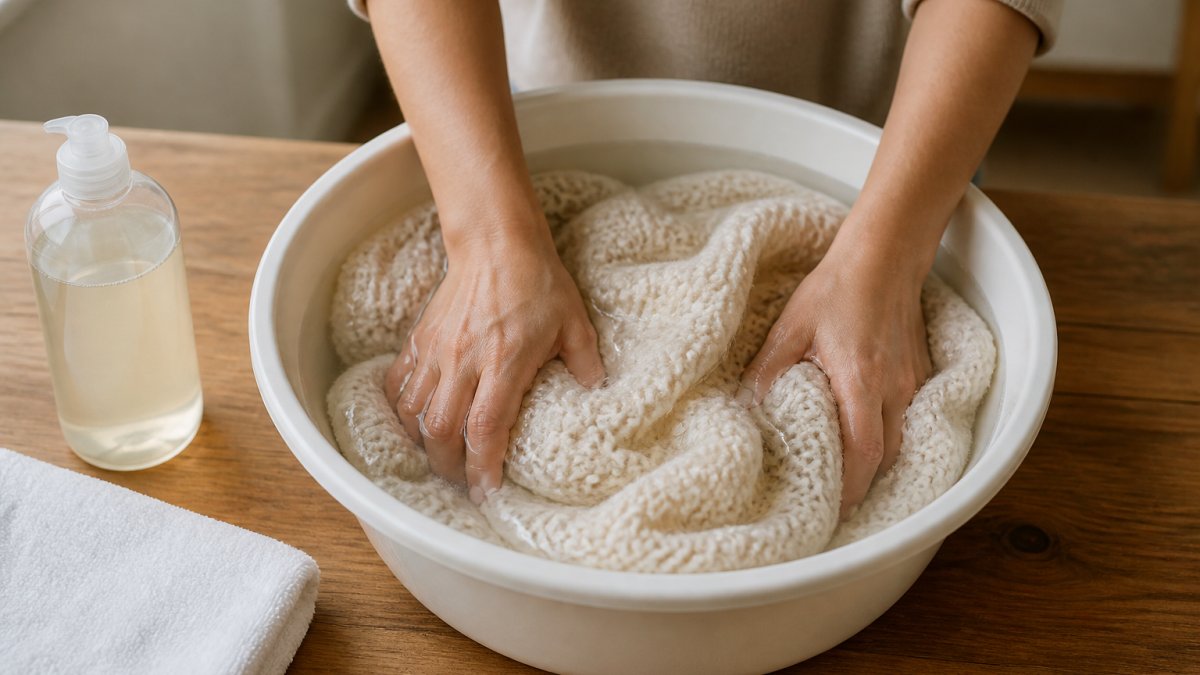
Steps for a Gentle Basin Soak
A gentle soak does most of the cleaning work. Keep these rules in mind:
- Use cool or lukewarm water, never hot
- Keep the soak under 30 minutes
- Support the blanket with both hands when lifting
Removing Water Without Wringing
Wringing is the fastest way to stretch a wet knit blanket. Instead, lay it flat on a clean towel, roll the two together like a log, and press down gently. The towel absorbs excess water while the blanket keeps its shape.
Machine Washing: Delicate Cycle Rules That Protect Stitches
A washing machine can work for sturdy knits, but only on the right settings:
- Select the gentle or delicate cycle
- Set the water to cold
- Use the lowest spin speed available
The mesh laundry bag is the single most important step: it stops the blanket from catching on the drum or other clothes.
Choosing a Mild or Wool-Safe Detergent
Detergent choice matters as much as the cycle. Strong soaps strip natural oils from wool and leave residue in cotton. Pick a mild, fiber-safe detergent; for wool, use a wool-safe formula. Skip enzymes, brighteners, and heavy perfume, too much soap is hard to rinse out and leaves the blanket stiff.
Skip Bleach and Fabric Softener
Bleach weakens fibers and fades color; fabric softener coats the yarn and reduces absorbency, making the blanket feel slick instead of soft.
For extra softness, add a half cup of cleaning vinegar to the rinse cycle, it removes soap residue and softens fibers without coating them.
How to Wash Bernat Blanket Yarn Projects
Bernat Blanket and similar chenille-style yarns are often chosen for custom knit blankets. The yarn is a polyester chenille: a core thread wrapped in short, densely packed fibers that give it the velvety pile.

Treat chenille as its own fiber category, not as "acrylic" or "polyester."
Chenille-Style Yarn Washing Rules
- Hand wash in cool water (under 85°F) whenever the blanket is small enough to lift safely
- Use a mild, enzyme-free detergent, enzymes break down the protein binders some chenille finishes use
- Never scrub, rub, or wring; the pile fibers tangle and mat permanently
Why Chenille Sheds and How to Manage It
New chenille sheds loose fibers for the first three to five washes, normal, as short fibers not fully locked into the core work their way out. Rinse twice in clean cool water to flush them. Do not pick at the pills; pulling one drags more fiber out of the core and creates a bald spot.
Drying Chenille Without Crushing the Pile
Skip the dryer entirely, heat collapses the pile and leaves the blanket flat and felted. Air dry flat on a towel or rack, away from direct sun. Once dry, fluff the surface with your fingertips or a soft brush in the direction of the nap; brushing against it causes new pills.
When Chenille Is Too Heavy for a Home Washer
A queen-size Bernat Blanket can weigh 6 to 10 pounds dry and considerably more when soaked. Most residential washers cannot move that much saturated fabric without stressing the drum or leaving detergent trapped in the pile. Hand wash in a bathtub or take it to a commercial laundromat with a large-capacity front-loader.
Quick Fiber Reference for Custom Knits
Match the method to the yarn the maker used:
| Fiber | Water Temp | Method | Dry | Watch For |
|---|---|---|---|---|
| Wool | Cool only | Hand wash, wool-safe detergent | Flat, away from heat | Shrinking, felting |
| Cotton | Cool or lukewarm | Hand or delicate machine | Flat, reshape wet | Stretching when wet |
| Acrylic | Cool | Delicate machine in mesh bag | Flat or low tumble | Pilling, heat damage |
| Chenille | Cool | Hand wash preferred | Flat, fluff when dry | Matting, shedding |
| Blends | Cool | Follow the most delicate fiber | Flat | Mixed shrinkage |
When in doubt, follow the most fragile fiber in the blend. A wool-cotton blend gets wool treatment, not cotton treatment.
To My Daughter - Heirloom Blanket →
How to Dry a Knit Blanket Without Stretching
Drying is where most blankets lose their shape. Heat and hanging both cause damage. Air dry every knit blanket flat on a clean towel or drying rack, smooth it into shape, and let it sit at room temperature, out of direct sun, which fades color.
Flat Drying and Reshaping Technique
Reshaping while wet is your chance to fix a slightly misshapen blanket:
- Lay the blanket flat on a dry towel
- Smooth out wrinkles with your palms
- Gently pull the edges back to their original size
- Match the corners so the blanket stays square
- Let it dry fully before moving it
Flip the blanket once halfway through drying so both sides dry evenly.
How to Wash a Wool Blanket Without Shrinking It
Wool is the most fragile fiber in this group, and heat is its enemy. But "wash in cool water and lay flat" is not enough, you need to understand what actually causes wool to shrink.
Why Wool Shrinks: The Scale Mechanism
Each wool fiber is covered in overlapping scales, like shingles on a roof. In cool water with no agitation, the scales lie flat and the fiber stays smooth.
The three enemies of wool are heat, agitation, and alkaline detergent. Remove all three and wool washes safely.
Hand Washing a Wool Blanket Step by Step
- Fill a clean basin or bathtub with cool water, 65°F to 75°F is the safe range
- Add a wool-safe detergent (look for "pH neutral" or "wool wash" on the label)
- Submerge the blanket and let it soak 15 to 20 minutes without moving it
- Press the water through the fibers with flat, open palms, never rub or squeeze
- Drain and refill with clean cool water of the same temperature
- Rinse until no suds remain, again without agitation
- Lift the blanket with both arms supporting the full width, never by one corner
A temperature change mid-wash can shock the fibers and cause partial felting. Keep the rinse water the same temperature as the wash water.
Weighted, Oversized, and Loosely Stitched Blankets
Custom blankets are often heavier and more loosely constructed than store-bought throws, which changes the washing decision.
- Weighted blankets (10 lbs and up): Most home washers cannot handle a saturated weighted blanket. The wet weight can exceed 30 pounds and stress the drum, the bearings, or the door seal. Hand wash in a bathtub, or use a commercial front-loader at a laundromat. Never use a top-loader with an agitator.
- Oversized blankets (queen, king, or larger): If the blanket does not fit loosely in the drum with room to tumble, it will not clean properly and the spin cycle will stretch it. Hand wash or go commercial.
- Loosely stitched blankets (open gauge, lace patterns, or chunky knits): The stitches can catch on the drum, the agitator, or other items. Always use a mesh laundry bag, and prefer hand washing. If a stitch pulls, do not cut it, take the blanket to the maker or a fiber repair specialist.
When to Skip Home Washing Entirely
Some blankets should never go in a home machine: hand-dyed wool, blankets with applied embellishments (beads, appliqués, embroidery), blankets with a fabric backing sewn on, and any blanket the maker labeled "dry clean only." For these, spot clean, air out, and take the blanket to a professional cleaner who handles wool and textiles, one cleaning costs far less than replacing a custom piece.
Drying Wool Without Damage
Dry the wool blanket flat and away from heat, not near a radiator, fireplace, or sunny window, since rapid heat locks and shrinks wool fibers irreversibly. Reshape to its original dimensions while damp: pull the edges gently, square the corners, and let it dry fully before moving it.
Storing Wool Between Washes
Wool does not need frequent washing, it resists odor and dirt naturally. Air it out after each use and wash only when soiled. Store clean, fully dry wool folded in a breathable cotton bag or cedar-lined chest; skip plastic bins, which trap moisture and invite mildew.
Spot Cleaning, Stains, and Colorfastness Testing
Spot cleaning handles small marks without a full wash, saving water, time, and wear on the fibers.
Blot the stain with a clean cloth and a little cool water, adding a drop of mild detergent if needed. Work from the outside inward so it does not spread, then rinse with a damp cloth and air dry.
Testing for Color Bleeding First
Color bleeding happens when dye transfers from the blanket to a cloth or another item. Test before you treat any stain.
Find a hidden spot, like a corner or the back edge, and dab it with a damp white cloth.
Treating Common Stains Safely
Different stains need different handling:
| Stain | First Step | What to Avoid |
|---|---|---|
| Coffee or tea | Blot with cool water | Hot water, which sets the stain |
| Grease | Dab with mild detergent | Rubbing, which spreads it |
| Ink | Blot, then spot clean | Bleach, which can strip color |
| Pet mess | Rinse with cool water | Fabric softener, which traps odor |
Treat stains fast. The longer a stain sits, the harder it is to lift without harsh products.
Washing Frequency, Storage, and Long-Term Care
Wash a custom knit blanket only when it needs it, every wash adds wear. For a blanket in daily use, wash every few months; a decorative throw or heirloom piece may only need a wash once a year. Air it out between uses to keep it fresh.

Frequently Asked Questions
Can you machine-wash a custom knit blanket?
Yes, if the care label allows it. Use cold water on a delicate or gentle cycle with a mild, fiber-safe detergent, and place the blanket in a mesh laundry bag to protect loose stitches and fringe. Skip bleach and fabric softener, then lay the blanket flat to air dry. If the label says hand wash only, or the blanket has weighted beads or loose stitching, wash it by hand instead.
Will a 100% cotton blanket shrink in the dryer?
It can. Cotton yarn responds to heat by shrinking and can also pill or lose its shape in a hot dryer. Air drying flat is the safest option for cotton knit blankets. If you must use a dryer, choose the lowest heat setting and remove the blanket while it is still slightly damp, then reshape it by hand and let it finish drying flat.
Is it better to wash or dry-clean a wool blanket?
Hand washing with cold water and a wool-safe detergent is usually the better choice for a wool blanket you use often. Dry cleaning is a reasonable option for heavily soiled or vintage wool pieces, but repeated dry cleaning can dull the fibers over time. Never use hot water or agitation on wool, since both cause shrinkage and fiber damage.
How often should you wash a custom knit blanket?
Wash a custom knit blanket every two to three months with regular use, or sooner if it picks up spills, pet hair, or odors. Blankets used daily may need washing monthly, while decorative throw blankets that sit on a chair can go six months between washes. Between washes, air the blanket outside in the shade and spot clean small marks right away.
A custom knit blanket is a keepsake, and the right care keeps it soft and square for years. At Bareluxes, our Heirloom Woven Blankets are made from 100% cotton yarn with colorful fringe, designed and shipped with care from our small USA-based team. Every order comes with our 100% customer satisfaction guarantee, so you can give a gift that lasts. Shop now and find a personalized blanket your loved one will cherish.


