


Table of Contents
- The Real Difference Between Artisan Jewelry and Mass-Produced Jewelry
- Handcrafted Quality and Attention to Detail
- One-of-a-Kind Designs and Creative Control
- How to Buy Handmade Jewelry: What to Look For
- Custom Handmade Jewelry: Personalization and Long-Term Value
- Sustainable Handmade Jewelry and Ethical Production
- The Economic Impact of Supporting Independent Makers
- Care, Repair, and Long-Term Durability
- Frequently Asked Questions
Last Updated: October 10, 2026
The Real Difference Between Artisan Jewelry and Mass-Produced Jewelry
When you buy mass-produced jewelry, you're buying something designed by committee, manufactured at scale, and optimized for margin. When you buy from independent artisan jewelry makers, you're buying something different entirely. The difference isn't just aesthetic, it's structural, economic, and personal.
Mass-produced jewelry follows a formula: standardized designs, minimal customization, and production methods built for speed. Independent artisans work the opposite way. They design fewer pieces, make them with intention, and often modify their work based on what a specific customer wants. The result feels different the moment you hold it.
This distinction matters more than most people realize. According to Craft and Hobby Association research on artisan markets, handcrafted items command higher perceived value and longevity compared to factory alternatives, largely because they carry the maker's deliberate choices throughout the production process.
The gap shows up in material selection, construction technique, and durability. A mass-produced necklace might use cheaper alloys and assembly-line soldering. An artisan piece uses materials chosen for longevity and finished by hand. One lasts a season. The other becomes an heirloom.
Handcrafted Quality and Attention to Detail
Handcrafted quality begins with the maker's commitment to their own standards. When an independent artisan creates jewelry, they're not answering to shareholders or quarterly targets. They're answering to themselves and their customers.
This changes everything about the process. Each piece gets individual attention. Joints are inspected. Finishes are refined.
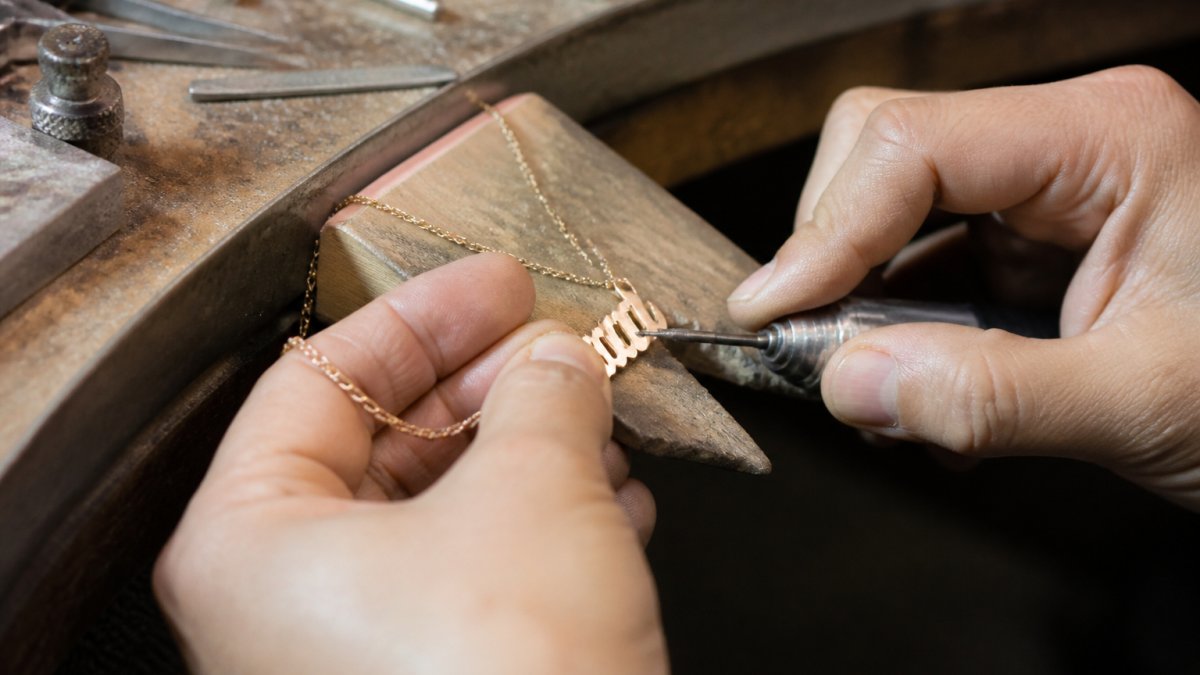
Bareluxes necklaces exemplify this approach. Our custom name necklaces are made in the USA with polished stainless steel or 18K gold finishes, and each piece is assembled with care before shipping. The adjustable cable chains, lobster clasps, and pendant work all receive individual inspection.

The practical difference becomes obvious over time. Handcrafted pieces don't develop the wear patterns of rushed assembly. Joints hold. Finishes maintain their luster. A well-made artisan necklace worn regularly can look nearly identical after five years. Mass-produced equivalents often show significant degradation within months.
One-of-a-Kind Designs and Creative Control
One-of-a-kind designs aren't just about having something nobody else owns. They're about having something that reflects your actual preferences rather than what a marketing team predicted would sell.
Independent artisans operate in a different design space than mass manufacturers. A large jewelry company designs a collection and produces thousands of identical pieces. An independent maker designs fewer pieces and often creates variations based on customer requests.
This is where personalization becomes meaningful. Custom handmade jewelry lets you participate in the design process. You choose the materials, the style, the dimensions, the inscriptions. You're not selecting from a pre-made palette, you're creating something specific to you.

Bareluxes's custom name necklaces demonstrate this flexibility. You can choose between classic cursive, signature contemporary font, or vertical orientation. You can select stainless steel or 18K gold. You can customize up to 10 characters.
This level of creative control matters for gifts especially.
How to Buy Handmade Jewelry: What to Look For
Buying from independent artisan jewelry makers requires different evaluation criteria than shopping at a department store. You're assessing a person's craftsmanship, not a brand's marketing.
Start with transparency. A maker who's confident in their work will explain their process openly. They'll discuss materials, show their workspace, describe their technique. If a maker is vague about how they work or where materials come from, that's a warning sign.
Verify Ethical Sourcing and Sustainability Claims
Ethical sourcing and sustainability claims are common in artisan jewelry marketing. Many of these claims are genuine. Some are not. Verification requires asking specific questions.
Ask where metals come from. Responsible makers can trace their precious metals back to a supplier or refinery. They can tell you whether metals are recycled or newly mined. They know the difference and they're willing to explain it.
For gemstones, ask about sourcing specifics. Where do the stones originate? How were they obtained? Were they ethically mined? A maker committed to ethical sourcing will have answers. They may not have perfect supply chains, few businesses do, but they'll be transparent about what they know and what they're working to improve.
Look for third-party verification when available. Certifications from organizations like the Responsible Jewellery Council or similar bodies provide external validation. Not all ethical makers are certified, but certification adds credibility when it's present.
Evaluate the Artisan's Craftsmanship and Process
Craftsmanship shows in details. Examine photos of finished work closely. Are seams clean? Are surfaces evenly finished? Do clasps align properly? Do chains lay flat?
Ask about materials and techniques. How long does a typical piece take to complete? What tools does the maker use? Do they hand-finish their work or rely on machines for everything? The answers reveal their commitment to quality.
Request information about durability. A maker who stands behind their work will discuss how their pieces hold up over time. They'll mention maintenance, repair options, and longevity. They might even offer resizing or repair services for pieces that need adjustment years later.
Check customer reviews and testimonials, but look beyond star ratings. Read what actual customers say about the buying experience, the quality of what they received, and whether pieces have held up. Patterns in feedback reveal whether a maker delivers consistently.
Custom Handmade Jewelry: Personalization and Long-Term Value
Custom handmade jewelry creates value in two ways: immediate emotional value and long-term economic value.
The immediate value is personal. A custom piece celebrates something specific, a name, a date, a symbol that matters to you. It's not a generic object. It's an object made because you decided it should exist.
Classic Heart Style Name Necklace →
Long-term value comes from durability and emotional significance. A well-made custom piece doesn't become dated. It doesn't degrade quickly. If anything, it accumulates meaning over time. A custom name necklace worn for ten years becomes more valuable, not less, because it carries a decade of memories.
This is why custom pieces often become heirlooms. They're made to last. They're made to mean something. They're made by someone who cared about the work. Those characteristics compound over time.
Bareluxes custom name necklaces, for example, are designed to be worn regularly. The adjustable chain accommodates different neck sizes and occasions. The construction supports years of wear. You're not buying a piece meant to be carefully stored, you're buying a piece meant to be lived with.

Sustainable Handmade Jewelry and Ethical Production
Sustainability in jewelry means different things depending on what you're measuring: material sourcing, production waste, labor practices, or longevity.
Independent artisans typically have smaller environmental footprints than large manufacturers simply due to scale. They produce less waste because they make less volume.
Ethical production starts with labor. An independent maker controls their own working conditions. They're not pressured to cut corners by corporate timelines. They're not competing on price with factories that rely on exploitative wages.
According to United Nations Environment Programme guidance on sustainable jewelry practices, smaller-scale artisan production typically generates lower environmental impact per unit than industrial manufacturing, particularly when makers prioritize material reuse and waste reduction.
Many independent makers also embrace sustainable materials intentionally. They use recycled precious metals. They source gemstones from ethical suppliers. They minimize packaging waste. These choices reflect their values, not just regulatory compliance.
When you buy from independent artisan jewelry makers, you're supporting production methods that prioritize sustainability and ethics by default. It's not a marketing angle, it's how smaller makers operate.
The Economic Impact of Supporting Independent Makers
Every purchase from an independent artisan has a direct economic impact. The money goes to a person, not a corporation. That person uses it to pay for materials, tools, rent, and living expenses. The economic multiplier effect is real.
When you buy from Bareluxes or similar independent makers, you're funding small business operations in the USA. You're supporting someone's livelihood. You're contributing to local economies. You're choosing to participate in a different economic model than mass retail offers.
This has measurable consequences. Independent makers typically reinvest revenue into their businesses, better tools, improved materials, skill development. They don't extract profits to shareholders. They build their craft. They improve their work.
According to Small Business Administration data on economic impact of artisan businesses, independent craft businesses generate higher per-dollar economic impact in their communities compared to large retail chains, primarily because revenue circulates locally rather than being consolidated at corporate headquarters.
The price difference between artisan and mass-produced jewelry reflects this economic reality. Artisan pieces cost more because the maker is compensated for their skill, time, and materials.
Care, Repair, and Long-Term Durability
Handcrafted jewelry requires the same basic care as any fine jewelry: avoid harsh chemicals, remove it before swimming or showering, clean it gently when needed. But the advantage of buying from independent makers is that repair and maintenance become straightforward.
If your custom necklace needs resizing, a maker can adjust it. If a clasp wears out, it can be replaced. If the finish dulls, it can be re-polished.
Mass-produced jewelry often presents a different problem. If something breaks, you might not be able to repair it affordably. You might not know where to take it. You might discover that the manufacturer doesn't support repairs. The piece becomes disposable.
Bareluxes necklaces are designed for longevity. The construction supports regular wear. And because they're made in the USA by a small business, repair and customization are available options.
The long-term durability of well-made artisan jewelry makes it a better value than it initially appears.
Supporting independent artisan jewelry makers means choosing quality, sustainability, and intention over convenience and cost-cutting. It means buying something made by someone who cares about their work.
When you're ready to choose handmade jewelry that combines personalization with genuine craftsmanship, Bareluxes offers custom name necklaces starting at $19.99 in polished stainless steel or 18K gold finishes. Each piece is made in the USA, customized with up to 10 characters, and backed by our 100% customer satisfaction guarantee. Shop Now and discover the difference that thoughtful, handcrafted jewelry makes.
Frequently Asked Questions
What makes independent artisan jewelry different from mass-produced jewelry?
Independent artisans create each piece with individual attention to detail, often customizing designs to your specifications. Mass-produced jewelry relies on automated machinery and standardized molds, resulting in identical pieces with less personalization. Artisan jewelry typically features superior craftsmanship, higher-quality materials, and unique design elements that reflect the maker's skill and vision. When you buy from independent makers, you're getting a one-of-a-kind piece made specifically for you, not one of thousands produced identically.
How can you verify that jewelry is genuinely handmade and ethically sourced?
Ask the artisan directly about their production process, materials sourcing, and any certifications they hold. Reputable independent makers are transparent about where their metals and gemstones come from and will explain their craftsmanship methods. Look for makers who document their process through photos or videos, provide material sourcing information, and are willing to answer questions about labor practices. Many artisans proudly display their workshop details and can trace their supply chain. Bareluxes, for example, makes all pieces in the USA and openly shares that items are designed, assembled, and shipped from our facility.
Why should you support independent jewelry makers instead of buying mass-produced pieces?
Supporting independent artisans preserves traditional jewelry-making skills, ensures fair labor practices, and keeps money in small businesses rather than large corporations. When you buy from independent makers, your purchase directly funds their livelihoods and allows them to continue creating sustainable, high-quality pieces. Independent makers typically source materials more responsibly, produce less waste, and create durable pieces designed to last generations. You also receive personalized customer service, the ability to customize designs, and the satisfaction of owning truly unique, handcrafted jewelry with a story behind it.
Is artisan handmade jewelry more sustainable than mass-produced options?
Yes, sustainable handmade jewelry typically produces less waste and uses more responsible sourcing practices. Independent artisans often work with recycled metals, ethically sourced gemstones, and small-batch production that minimizes environmental impact. Mass-produced jewelry relies on high-volume manufacturing, which generates significant waste and often sources materials without transparency.


