


Table of Contents
- Danforth Pewter vs Belviaggio Designs: A Quick Comparison
- Pewter vs Fine Jewelry: What the Materials Actually Mean
- Craftsmanship Styles: Handcrafted Pewter vs Bespoke Jewelry
- Maintenance and Longevity: What Lasts Decades?
- Price-per-Gram and Value Retention Analysis
- Best Personalized Jewelry Brands for Sentimental Gifts
- How to Choose a Custom Jewelry Designer
- Frequently Asked Questions
Last Updated: September 16, 2026
Danforth Pewter vs Belviaggio Designs: A Quick Comparison
Danforth Pewter vs Belviaggio designs compares two different product categories: handcrafted pewter goods and fine jewelry. Danforth Pewter is a heritage pewter maker known for handcrafted home goods and ornaments; Belviaggio Designs is a boutique studio focused on lab-grown diamond and moissanite engagement rings. Choosing between them depends less on prestige than on what you want to give.
That distinction matters more than most shoppers expect. Pewter is a tin alloy mixed with small amounts of copper and antimony, which keeps it affordable and easy to shape but softer than precious metals. Fine jewelry uses gold, platinum, and sterling silver, often set with gemstones graded on cut, clarity, carat weight, and color. This guide from Bareluxes breaks down material differences, craftsmanship, maintenance, and value so you can pick the right gift.
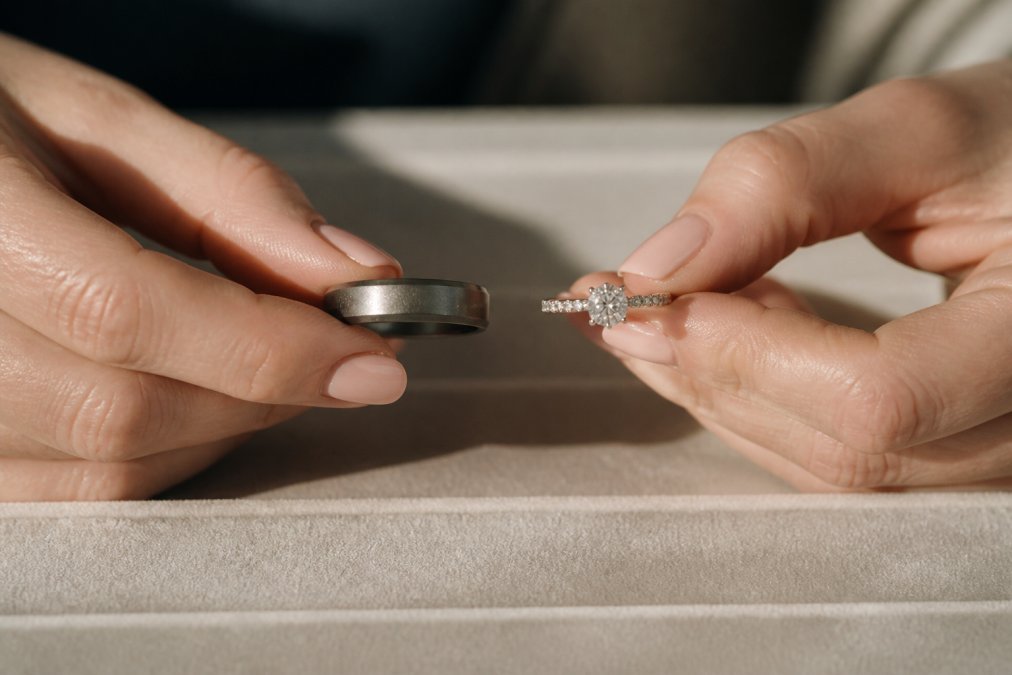
At-a-Glance Comparison Table
| Factor | Danforth Pewter | Belviaggio Designs |
|---|---|---|
| Material | Pewter alloy (tin-based) | Precious metals, lab-grown diamonds |
| Craft style | Handcrafted, traditional | Bespoke, made to order |
| Typical gift | Ornaments, home goods | Engagement and anniversary rings |
| Durability | Softer, dents with impact | Harder, resists daily wear |
| Maintenance | Occasional polish | Periodic cleaning and inspection |
| Best for | Sentimental keepsakes | Milestone jewelry gifts |
Pewter vs Fine Jewelry: What the Materials Actually Mean
Pewter and fine jewelry are different categories serving different purposes. Pewter is a base metal alloy valued for its workability and warm, muted finish. Fine jewelry is built from precious metals and gemstones valued for rarity, durability, and long-term retention. The gap shows up in three measurable properties: hardness, melting point, and reaction to the body and household environment.
Pewter: Alloy, Tarnish, and Durability
Modern pewter is typically about 90-95% tin, with the balance split between copper, antimony, and sometimes bismuth. That mix is why pewter melts at roughly 450-500°F, low enough that a hobbyist with a kitchen torch can cast it, and low enough that a piece left on a hot dashboard or near a stovetop can warp. On the Mohs scale, pewter sits around 1.5-2, so a fingernail can scratch it. A dropped ornament will dent; a daily-use mug shows a rounded edge within a year or two.
That softness is also pewter's advantage. Because the alloy flows into fine detail at low temperature, handcrafted ornaments, figurines, and relief plaques hold crisp edges that would be difficult or costly to reproduce in gold or platinum. The tradeoff: pewter is a display material, not a wear material. It develops a dull patina over time, some collectors prize this, others polish it away, and tarnish resistance varies by alloy mix. Lead-free pewter sold in the U.S. must meet federal limits on lead content, so any reputable maker will confirm the alloy is lead-free.
Fine Jewelry: Precious Metals and Gemstones
Fine jewelry uses gold, platinum, or sterling silver, often set with diamonds or moissanite. The hardness numbers tell the story: 24k gold is roughly 2.5 on the Mohs scale, but the 14k and 18k alloys used in most rings land around 3.5-4; platinum is about 4-4.5; sterling silver about 2.5-3. All three outlast pewter in daily wear, and platinum resists deformation because it moves rather than flakes when scratched.
Lab-grown diamonds share the same physical and optical properties as mined stones and are graded on the same cut, clarity, carat weight, and color scale, as outlined by the Gemological Institute of America's diamond grading standards. Moissanite offers a different look with high brilliance at a lower cost, though its refractive index is higher than diamond's, which is why moissanite throws more rainbow-colored fire under direct light. Precious metals resist everyday wear far better than pewter, which is why engagement rings and anniversary jewelry are built from them, and why a jeweler will recommend a 14k or 18k alloy over 24k for a ring that gets worn daily.
The Practical Split
If the piece will sit on a shelf, hang on a tree, or rest on a mantel, pewter's low melting point and easy casting make it the more detailed and affordable choice. If it will be worn against skin, exposed to handwashing, lotion, and gym equipment, precious metal is the only category that survives the decade. Treating them as interchangeable because both are "metal gifts" is the mistake, they are two materials with two different jobs.
Craftsmanship Styles: Handcrafted Pewter vs Bespoke Jewelry
Craftsmanship in pewter and bespoke jewelry follows two philosophies. Pewter work is traditional and production-oriented, with artisans casting, finishing, and detailing each piece by hand. Bespoke jewelry is consultative, built around one customer's design brief.
A bespoke process starts with a design consultation, moves through sketches or CAD renderings, and ends with a finished piece set by a jeweler.
Maintenance and Longevity: What Lasts Decades?
Fine jewelry outlasts pewter in daily-wear conditions, but both can last decades with the right care. The difference is what "care" means for each.
- Pewter: dust with a soft cloth, polish lightly, store dry
- Sterling silver: polish to remove tarnish, store in anti-tarnish pouches
- Gold and platinum: professional cleaning, prong inspection annually
- Gemstone rings: remove before heavy manual work or swimming
Price-per-Gram and Value Retention Analysis
No competitor on this query breaks down price-per-gram or resale behavior, the biggest gap in current search results. Here is the honest version.
Price-per-Gram: The Raw Material Math
Pewter's raw material cost is a small fraction of its retail price. Tin trades far below gold or platinum, and a finished pewter ornament weighing a few ounces carries a retail price driven mostly by design, mold-making, hand-finishing, and packaging, not the metal. Most of what you pay for pewter is labor and brand, not material.
Resale and Value Retention
Pewter keepsakes rarely hold resale value. The material is common, pieces are often personalized, and there is no liquid secondary market for used pewter figurines or ornaments. Sentimental value is real but does not convert to cash. Buy pewter because you want the object, not because you expect it to appreciate.
What This Means for a Buyer
If resale matters, weight the decision toward the metal. A simple 14k or 18k gold band with a modest stone retains more value than an elaborate setting with a large lab-grown center stone, because the metal floor does the work. If resale does not matter, and for most engagement and anniversary purchases it does not, buy the piece you want to look at every day and treat the price as the cost of the experience, not an investment.
Best Personalized Jewelry Brands for Sentimental Gifts
The best personalized jewelry brands for sentimental gifts let you control the design, confirm the timeline, and stand behind the finished piece. Personalization is where a gift stops being generic and starts meaning something.
When you compare options, weigh these factors:
- Design control: can you choose names, dates, fonts, or symbols?
- Materials: sterling silver, gold plating, or solid gold?
- Timeline: how many days from order to shipment?
- Guarantee: what happens if the piece arrives wrong or you dislike it?
- Origin: is the item actually made and assembled where the brand claims?
How to Choose a Custom Jewelry Designer
- Review at least 10 past pieces in your target style
- Confirm the exact metals and gemstones they use
- Get a written timeline with a ship-by date
- Ask how revisions work during the design phase
- Read the guarantee and return policy in full
- Verify where the piece is made and assembled
If you're buying for a partner or parent, match the piece to the occasion rather than the trend. A custom name necklace works for a birthday, and a commemorative plaque for a milestone. The right category does more than any single design flourish.
Frequently Asked Questions
What materials does Danforth Pewter use for their products?
Danforth Pewter uses a lead-free pewter alloy made primarily of tin, along with small amounts of copper and antimony. This base metal combination gives their pieces a soft, matte finish that can be hand-polished. Pewter is not a precious metal, so it tarnishes over time and requires occasional polishing to maintain its look. It is a durable material for decorative items but softer than gold or platinum.
Is Belviaggio Designs known for custom engagement rings?
Belviaggio Designs focuses on bespoke and custom design work, particularly engagement rings and fine jewelry using precious metals and lab-grown diamonds or moissanite. Their process typically includes a design consultation where you discuss gemstone quality, carat weight, and setting style. This makes them a fit for shoppers who want a one-of-a-kind piece rather than a ready-made item.
How do the craftsmanship styles of Danforth Pewter and Belviaggio Designs differ?
Danforth Pewter is known for handcrafted pewter items made in a traditional studio setting, often using casting and finishing techniques passed down over generations. Belviaggio Designs takes a bespoke jewelry approach, working with precious metals, gemstones, and CAD modeling to create custom pieces. One emphasizes heritage pewter craftsmanship; the other focuses on fine jewelry design and stone setting.
What should I look for when choosing between pewter and fine jewelry gifts?
Consider the recipient's expectations and how the piece will be worn. Pewter works well for decorative keepsakes, ornaments, or display items where a rustic, handcrafted look is desired. Fine jewelry in precious metals suits everyday wear and milestone occasions like anniversaries. Check the material's tarnish resistance and the return policy before you buy.


